Friday, 27 September 2013
Wes Anderson // From Above
4)
This would be a good piece of evidence as it highlights Anderson using a particular shot, the overhead shot, throughout his films, showing a particular visual style which enables the audience to gain an insight to the characters, allowing for a better visual narrative style. Moreover, it is a useful piece of evidence as it allows for the discussion of his cinematographic style and the influence of it on his films.

DP/30: The Fantastic Mr Fox, director Wes Anderson
5)
This will be a useful piece of evidence as it explains his process when approaching a film, explaining how the visual narrative style of the film is developed. For example, he immersed himself in the Roald Dahl world, writing the script at Dahl's house, and basing much of the mise en scene on Dahl's furniture and house, but also the setting of Fantastic Mr. Fox is inspired by the landscape surrounding his house too. However, he also discusses how he doesn't actively try and keep to a particular style, saying he simply does what he likes.
Notes on interview
- Wrote script at Roald Dahl's house
- Design of film comes from house and film (furniture in film based on furniture in his house)
- Fox not wanting to lose contact with wild
- Just does what he likes in films, doesn't actively try to keep to his "style"
- Different voice recording style-on location eg. if scene was outside, they recorded outside, enabled accidents and spontaneity
- edited script and added scenes as they went
- Can't start next film until current is completely finished and distributed everywhere
Thursday, 19 September 2013
Does the visual narrative style of wes anderson make him an auteur?
Does the visual narrative style of Wes Anderson, make him an auteur?
Films
1. Moonrise Kingdom (2012)
I'm using this as it is Anderson's latest film and will be good to see how his visual narrative style has developed and the direction it is taking. As well as that the film's narrative can be seen as a change in Anderson's normal narrative motifs, focusing on two children, rather than on adults, who act like children. However, it is a clear and excellent example of his clear, distinctive visual narrative style. Furthermore, it easily can be seen culmination in his work, using techniques he has explored and experimented in his previous body of work.
2. Fantastic Mr. Fox (2009)
I chose this film as one of my focus films as it shows Anderson's clear visual narrative style transferred to stop motion animation. Moreover it keeps to the same aesthetic style, with elaborate, detailed sets, and includes similar cinematographic techniques and shots. Also Anderson uses chapters to progress the narrative like in his live action films. In addition, Mr Fox is a typical Anderson main character holding similar qualities with other characters in his films. Also it illustrates Anderson interpreting an existing narrative, and making it his own.
3. Rushmore (1998)
I've decided to choose Rushmore as one of my chosen films as it's visual narrative style is typical Anderson, and can be seen as establishing his style. It is an useful source of Anderson's auteur style as it introduces many of his key motifs and styles, like long tracking shots, and the idea of a 'man-child'; but he also has created a 'heightened reality' in the film, which would become a staple of Anderson's films.
Interviews
4. DP/30 Interview http://www.youtube.com/watch?feature=player_embedded&v=9OuK--xC4M0
This will be a useful piece of evidence as it explains his process when approaching a film, explaining how the visual narrative style of the film is developed. For example, he immersed himself in the Roald Dahl world, writing the script at Dahl's house. Also basing much of the mise en scene on Dahl's furniture and house, but also the setting of Fantastic Mr. Fox is inspired by the landscape surrounding his house. However, he also discusses how he doesn't actively try and keep to a particular style, saying he simply does what he likes. This source is very useful to understand how his auteur style is created.
5) Grantland Interview http://www.grantland.com/blog/hollywood-prospectus/post/_/id/52048/wes-anderson-explains-how-to-make-a-wes-anderson-filmhttp://
This is a useful piece of evidence to say Anderson is an auteur because of his visual narrative style because in the interview, Anderson himself explains how he makes a film. Moreover this gives clues to how the style of Anderson's films are created and how this might make him an auteur. Also, there is a useful quote within the article which makes his auteur approach clearer.
6) Guardian Interview http://www.theguardian.com/film/2012/may/19/wes-anderson-moonrise-kingdom?newsfeed=true
This is a good piece of evidence as the interview helps to explain how the themes in Anderson's films affect his visual narrative style, showing how he views certain characters and why he decided to focus on their story. Moreover it supports the idea that Anderson is an auteur, suggesting that his style is influential over everything in his films therefore making it a useful piece of evidence.
Video evidence
7) http://www.youtube.com/watch?feature=player_embedded&v=PNpVURAgG5g
This is a good piece of evidence as it highlights Anderson using a particular shot, the overhead shot, throughout his films, showing a particular visual style which enables the audience to gain an insight to the characters, allowing for a better visual narrative style. Moreover, it is a useful piece of evidence as it allows for the discussion of his cinematographic style and the influence of it on his films, using it in my presentation to prove his style.
8) Rushmore Video Essay http://vimeo.com/77015707
This is a good piece of evidence as it highlights the different visual techniques Anderson employs in Rushmore, like the curtain pulling at the start of each month. Moreover, it shows the influence on Anderson of other directors, like Bill Melendez and Francois Truffaut, referencing them both. I will therefore use it to support the theory behind Anderson's films.
This helps explain some of the technical reasons why Wes Anderson can be regarded as an auteur, explaining how some of his films have a colour palette and scheme, like the "yellow, green and pale blue in Moonrise Kingdom. But also explains how the soundtrack adds to the visual style, behaving like another character, which clearly shows an auteur approach.
10) http://waystomakeyousee.wordpress.com/2012/11/04/wes-anderson-the-auteur-of-our-generation/
This piece would be a good piece of evidence, as it explains why Anderson can be regarded as an auteur, showing how his auteur style has been influenced by other filmakers like Truffaut, and other Nouvelle Vague auteurs.
11) Telegraph article http://www.telegraph.co.uk/culture/film/6387593/Wes-Anderson-interview-for-Fantastic-Mr-Fox.html
In the article, it discusses how Anderson's meticulous approach to film creates his detailed worlds, resulting in his distinctive visual narrative style illustrating why he can be regarded as an auteur. Also showing his impact on every stage of production in his films, and how his style is created.
12) NPR Transcript http://www.npr.org/templates/transcript/transcript.php?storyId=153913922
This is a particularly good piece of evidence, as in the interview, Anderson explains how his visual narrative style is influenced, or example mentioning the affect of theatre on his films, and in Moonrise Kingdom how he wanted to create a fable like feel to the film, and making it appear like a "storybook".
Books
13) Adventures in the Screen Trade by William Goldman
In the auteur chapter, he argues against the auteur theory's existence in films, citing that a film is authored by all those involved. He says that films are much more a collaborative effort, and that without screenwriters, producers and cinematographers etc, some of the most popular and successful films would not be as good. Adding that a director is not an author as he does not create everything in a film. I will use this to counter argue and develop the debate of the presentation.
14) Teach Yourself Film Studies by Warren Buckland
This is a useful source of evidence as it helps to establish the theory and explain how Anderson can be regarded as one. Moreover, it gives a background to the theory and enables me to have a criteria to compare and explain the theory in my presentation and would be very useful to use quotes to argue for the existence of auteurs.
Images
15) Image of Wes Anderson found at http://static.guim.co.uk/sys-images/Guardian/Pix/pictures/2012/5/16/1337173461558/Wes-Anderson-001.jpg
Rejected items:
http://www.nybooks.com/blogs/nyrblog/2013/jan/31/wes-anderson-worlds/
I've rejected this piece because it was just an extract of an introduction for a book on Wes Anderson and was just comparing him to other individuals who share his level of detail. Moreover as it was just introducing his piece, it didn't include much information or evidence on why Anderson could or couldn't be regarded as an auteur.
pitchfork interview http://pitchfork.com/features/interviews/8877-wes-anderson/1/
Films
1. Moonrise Kingdom (2012)
I'm using this as it is Anderson's latest film and will be good to see how his visual narrative style has developed and the direction it is taking. As well as that the film's narrative can be seen as a change in Anderson's normal narrative motifs, focusing on two children, rather than on adults, who act like children. However, it is a clear and excellent example of his clear, distinctive visual narrative style. Furthermore, it easily can be seen culmination in his work, using techniques he has explored and experimented in his previous body of work.
2. Fantastic Mr. Fox (2009)
I chose this film as one of my focus films as it shows Anderson's clear visual narrative style transferred to stop motion animation. Moreover it keeps to the same aesthetic style, with elaborate, detailed sets, and includes similar cinematographic techniques and shots. Also Anderson uses chapters to progress the narrative like in his live action films. In addition, Mr Fox is a typical Anderson main character holding similar qualities with other characters in his films. Also it illustrates Anderson interpreting an existing narrative, and making it his own.
3. Rushmore (1998)
I've decided to choose Rushmore as one of my chosen films as it's visual narrative style is typical Anderson, and can be seen as establishing his style. It is an useful source of Anderson's auteur style as it introduces many of his key motifs and styles, like long tracking shots, and the idea of a 'man-child'; but he also has created a 'heightened reality' in the film, which would become a staple of Anderson's films.
Interviews
4. DP/30 Interview http://www.youtube.com/watch?feature=player_embedded&v=9OuK--xC4M0
This will be a useful piece of evidence as it explains his process when approaching a film, explaining how the visual narrative style of the film is developed. For example, he immersed himself in the Roald Dahl world, writing the script at Dahl's house. Also basing much of the mise en scene on Dahl's furniture and house, but also the setting of Fantastic Mr. Fox is inspired by the landscape surrounding his house. However, he also discusses how he doesn't actively try and keep to a particular style, saying he simply does what he likes. This source is very useful to understand how his auteur style is created.
5) Grantland Interview http://www.grantland.com/blog/hollywood-prospectus/post/_/id/52048/wes-anderson-explains-how-to-make-a-wes-anderson-filmhttp://
This is a useful piece of evidence to say Anderson is an auteur because of his visual narrative style because in the interview, Anderson himself explains how he makes a film. Moreover this gives clues to how the style of Anderson's films are created and how this might make him an auteur. Also, there is a useful quote within the article which makes his auteur approach clearer.
6) Guardian Interview http://www.theguardian.com/film/2012/may/19/wes-anderson-moonrise-kingdom?newsfeed=true
This is a good piece of evidence as the interview helps to explain how the themes in Anderson's films affect his visual narrative style, showing how he views certain characters and why he decided to focus on their story. Moreover it supports the idea that Anderson is an auteur, suggesting that his style is influential over everything in his films therefore making it a useful piece of evidence.
Video evidence
7) http://www.youtube.com/watch?feature=player_embedded&v=PNpVURAgG5g
This is a good piece of evidence as it highlights Anderson using a particular shot, the overhead shot, throughout his films, showing a particular visual style which enables the audience to gain an insight to the characters, allowing for a better visual narrative style. Moreover, it is a useful piece of evidence as it allows for the discussion of his cinematographic style and the influence of it on his films, using it in my presentation to prove his style.
8) Rushmore Video Essay http://vimeo.com/77015707
This is a good piece of evidence as it highlights the different visual techniques Anderson employs in Rushmore, like the curtain pulling at the start of each month. Moreover, it shows the influence on Anderson of other directors, like Bill Melendez and Francois Truffaut, referencing them both. I will therefore use it to support the theory behind Anderson's films.
Articles
This helps explain some of the technical reasons why Wes Anderson can be regarded as an auteur, explaining how some of his films have a colour palette and scheme, like the "yellow, green and pale blue in Moonrise Kingdom. But also explains how the soundtrack adds to the visual style, behaving like another character, which clearly shows an auteur approach.
10) http://waystomakeyousee.wordpress.com/2012/11/04/wes-anderson-the-auteur-of-our-generation/
This piece would be a good piece of evidence, as it explains why Anderson can be regarded as an auteur, showing how his auteur style has been influenced by other filmakers like Truffaut, and other Nouvelle Vague auteurs.
11) Telegraph article http://www.telegraph.co.uk/culture/film/6387593/Wes-Anderson-interview-for-Fantastic-Mr-Fox.html
In the article, it discusses how Anderson's meticulous approach to film creates his detailed worlds, resulting in his distinctive visual narrative style illustrating why he can be regarded as an auteur. Also showing his impact on every stage of production in his films, and how his style is created.
12) NPR Transcript http://www.npr.org/templates/transcript/transcript.php?storyId=153913922
This is a particularly good piece of evidence, as in the interview, Anderson explains how his visual narrative style is influenced, or example mentioning the affect of theatre on his films, and in Moonrise Kingdom how he wanted to create a fable like feel to the film, and making it appear like a "storybook".
Books
13) Adventures in the Screen Trade by William Goldman
In the auteur chapter, he argues against the auteur theory's existence in films, citing that a film is authored by all those involved. He says that films are much more a collaborative effort, and that without screenwriters, producers and cinematographers etc, some of the most popular and successful films would not be as good. Adding that a director is not an author as he does not create everything in a film. I will use this to counter argue and develop the debate of the presentation.
14) Teach Yourself Film Studies by Warren Buckland
This is a useful source of evidence as it helps to establish the theory and explain how Anderson can be regarded as one. Moreover, it gives a background to the theory and enables me to have a criteria to compare and explain the theory in my presentation and would be very useful to use quotes to argue for the existence of auteurs.
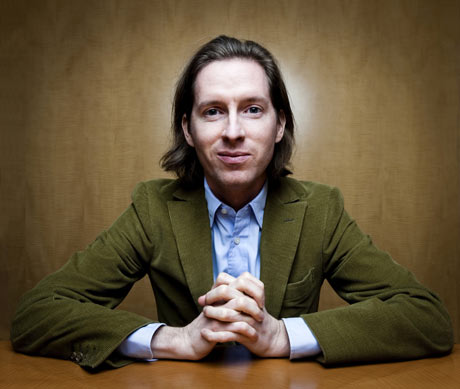
15) Image of Wes Anderson found at http://static.guim.co.uk/sys-images/Guardian/Pix/pictures/2012/5/16/1337173461558/Wes-Anderson-001.jpg
Rejected items:
http://www.nybooks.com/blogs/nyrblog/2013/jan/31/wes-anderson-worlds/
I've rejected this piece because it was just an extract of an introduction for a book on Wes Anderson and was just comparing him to other individuals who share his level of detail. Moreover as it was just introducing his piece, it didn't include much information or evidence on why Anderson could or couldn't be regarded as an auteur.
pitchfork interview http://pitchfork.com/features/interviews/8877-wes-anderson/1/
I've rejected this interview as it briefly focused on the musical aspects of Anderson's film, and was more about his personal opinions when it came to music. Also it didn't produce any useful evidence i could use for my presentation.
This wasn't useful and i rejected it because it was a brief piece and didn't really discuss how these films affected Anderson's visual narrative style. Moreover it didn't allow me to support any points i could make about whether he is an auteur.
I rejected this piece again because it simply documented what Anderson has directed and didn't comment or provide any supporting evidence on Anderson's particular visual narrative style.
http://flavorwire.com/383699/exclusive-illustrated-floor-plans-for-wes-anderson-films/4/
I've rejected this item as it is an unofficial illustration for a blog inspired by Anderson's films. This isn't useful as it is just an illustration and as it is created by a third party, it doesn't particularly show Anderson's visual narrative style and doesn't suggest he is an auteur.
Thursday, 20 June 2013
Auteur & Wes Anderson
Auteur & Wes Anderson
6) analyses thing
This helps explain some of the technical reasons why Wes Anderson can be regarded as an auteur, explaining how some of his films have a colour palette and scheme, like the "yellow, green and pale blue in Moonrise Kingdom. But also explains how the soundtrack adds to the visual style, behaving like another character.
7) auteur of our generation article
This piece would be a good piece of evidence, as it explains why Anderson can be regarded as an auteur, showing how his auteur style has been influenced by other filmakers like Truffaut, and other Nouvelle Vague auteurs.
Reject: pitchfork interview
8) grantland interview
"Favourite" films interview
NPR transcript
everything he's ever directed
9) Guardian interview
This is a good piece of evidence as the interview helps to explain how the themes in Anderson's films affect his visual narrative style, showing how he views certain characters and why he decided to focus on their story. Moreover it supports the idea that Anderson is an auteur, suggesting that his style is influential over everything in his films.
10) Adventures in the Screen Trade by William Goldman
In the auteur chapter, he argues against it's existence, citing that a film is authored by all those involved
Thursday, 13 December 2012
The Hunt

- Film shows main character surrounded and reflects the plot of the film and shows that everyone is against him.
- As well as that he appears in focus and shows the plot revolves around him
- Has the films director showing promenently and will attract fans of the director, and will draw the audience.
- It also has the main characters actor's name on it to attract his fans
- It also shows it was part of the official selection for cannes and will draw the audience in as it shows the film has received some recognition
Tuesday, 4 December 2012
Skyfall
 |
| bond init |
Bond appears in the centre showing his dominance and importance to the film, but also illustrates the franchise and attract people automatically to the film. But also fans of Daniel Craig will be attracted as well as he appears clearly and looking directly towards the viewer. Bond also appears in a suit and holding a gun, which are motifs of the franchise and would attract fans of the past films as it shows the Bond people loved in previous films hasn't changed. Bond's face also appears half in shadow and half in light, and suggests to the audience that his actions aren't always good, but the half in light shows he has good intentions, which is a regular theme throughout the Bonds.
Daniel Craig's name doesn't appear on the poster showing that he isn't the main attraction to the film, but the highlighted 007 and the repetition of it shows that people are attracted to watch the film because of the character and the narrative of the films. The union jack appears in colour showing the importance of it and his country, and shows that the storyline is going to revolve around protecting Britain.
- The obituary of Bond creates questions for the audience as it implies Bond is dead and attracts people to the film as they want answers.
- The trailer also reveals the plot of the film which will attract more people to the film and draw them in as they want to know what will happen.
- Action from the film is included which portrays the genre of the film and will attract the target audience
- The trailer also shows motifs of the Bond franchise and will attract loyal fans of the franchise
Wednesday, 10 October 2012
Alien Analyse
I had to analyze two
scenes from the 1979, sci-fi horror film, Alien, and discuss how the
cinematography helps to add to the scenes.
The first scene I had
to analyze was the Chestburster scene, where the crew helplessly holds down
Kane as the alien forces itself out of his chest. The scene starts with the crew sitting around
the table in the canteen, celebrating Kane’s ‘recovery’. The wide medium shot creates a sort of
normality and the three shot helps to support this and makes the scene feel
more innocent and creates a false sense of security in the audience, who like
me, believe Kane has recovered and is fine, which creates more surprise,
confusion and shock as the scene progresses. I also felt that the eye level
shot helped to make me feel part of the scene and part of the crew, which makes
the viewer more caring for Kane when he rolls in pain. The quite neutral eye
level mid shot also makes me and the audience more unaware and oblivious to the
alien inside of Kane.
However when Kane
starts to cough uncontrollably, he appears in the centre of the screen, and the
shot obeys the rule of thirds. This helps to make Kane the centre of attention
for the audience and creates more tension as the audience and I are unsure on
what is happening but we know it is important as he dominates the shot. As the crew and the audience start to worry
for Kane, it quickly changes to a high angle mid-close up. This helps to show
how vulnerable Kane is, and foreshadows threat from within. In this shot it also shows some of the crew,
which also foreshadows that they aren’t save either. As well as that Kane appears with his back
towards the camera, the mise en scene of this shows how Kane isn’t himself,
which creates more suspense as I and the audience want to know what is wrong
with him.
The diegetic sound of
Kane coughing and the crew asking if he is okay, just add to the realism of the
scene and makes it more believable. I found myself feeling like part of the
crew and feeling like I was in the room with them, confused as to why Kane was
coughing. As he collapses onto the table, it cuts to hand held point of view
shots of Kane struggling on the table. These jerky shots help to make the
audience feel apart of the scene and I felt like I was helping to hold down
Kane. The majority of shots in the scene
are in deep focus, this makes it harder to miss anything and allows the
audience to see everything. This makes
the scene more shocking and disturbing and you feel apart of it and the medium
close ups makes the audience witness all of Kane’s struggle and pain, and made
the scene more memorable and disturbing for me, as you can see all the agony
Kane is in.
But the sudden shift
to shallow focus and the close up of the alien, once it burst through, shows
the significance of it and foreshadows the dominance it will have over the
other members of the crew. Moreover the sudden silence and the lack of diegetic
sound, which the alien provokes, shows the shocking and horrible nature of it
and just emphasizes the tragic nature of Kane’s death.
The second scene I had
to analyze was the, Here Kitty scene. In the scene Brett goes after the cat but
however is attacked and killed by the alien. The scene uses a lot of close ups
on Brett and uses shallow focus to distort the background and create more
tension and suspense as the audience and I watch the unfocused alien creep up
on Brett. The cinematography is also added to by the diegetic sound of his
death. Also it doesn't use music and made it more realistic for me and more
believable. Moreover the scene uses low key lighting which is a convention of
the horror genre, and makes the audience more suspicious of what is about to
happen, but also again it builds more tension and suspense as the audience can
anticipate Brett’s death. As well as that,
the editing helps to create a confusion and made me feel like I was apart of
the scene. Also after Brett is attacked, there is a Shot Reverse Shot, using
the cat. This creates the point of view
of the cat and makes the audience feel like they are witnessing Brett’s death,
bringing a shocking realism to the scene.
Subscribe to:
Posts (Atom)