How far do the films you have studied for this topic offer an analysis of the social issues they present?
The films i have studied, La Haine, Chungking Express and City of God all portray an analysis of the social issues that affect the cities and the characters that are presented in the film. In the opening of the City of God, we are presented with extreme close ups of a knife cutting and killing chickens. This can be seen as a representation of how life in the favelas in Rio De Janeiro, showing with the close ups that life is on a 'knife edge'. This illustration of the social issues analysis's how dangerous favelas are, where life expectancy for men is extremely low, due to crime and the gangs. Moreover, the fast, non-diegetic samba music, a stereotypical Brazilian sound, again points to how the problems and the social issues are typically Brazilian. However, the fast music could also be used to highlight how fast paced life in the favelas is, suggesting a key social issue is the lack of roots because no one can stop still in the favela, because, like the chicken, shown with the handheld, quickly cut shots; everyone is being chased. This successfully analyses a key social issue that, in a sense, everyone is being hunted, whether it's from the gangs or the police; and that their is no escape from the favelas.
then i will expand on to saying how their is no escape etc etc........
Compare the challenges presented to the spectator by different experimental and expanded film/ video works.
Spectators of experimental cinema are often challenged due to differences with it and the mainstream. The purely abstract Stellar by Stan Brakhage, challenged me as on first viewing it appears completely meaningly and had dismissed it as a purely aesthetic film.
Monday, 16 June 2014

Wednesday, 14 May 2014
How far can it be argued that your chosen films provide a 'realistic' representation of the people and places they focus on?
In City of God, it could be interpreted as being a very realistic interpretation of life in the favelas. When the tender trio rob the gas truck, we follow them running in long and mid shots, panning and following them with a hand held camera. This allows the audience to get a realistic snapshot of the beginnings of the favelas and the miss en scene. The simple houses are more open and theirs generally more space, suggesting their is more optimism in the community. Moreover, the houses appear identical and ordered, illustrating that crime was less of a problem, and the community was still under control. Moreover, the shots are longer, emphasising that their live expectancy was longer. This is a realistic interpretation of the time, as the housing projects were still relatively new, and the people still trusted the government and were hopeful of the city of god.
However, it could be argued that the film isn't realistic. When Shaggy sees Bernice, non-diegetic acoustic, romantic music starts to play, and the shot reverse shot of her being lit by a candle, uses a cliche sort of love at first sight theme, to break away from the realistic violence of the favelas. This could be seen as Shaggy escaping his life as a hood, however, Bernice's mother questioning him, brings him back to reality.
However, it could be argued that the film isn't realistic. When Shaggy sees Bernice, non-diegetic acoustic, romantic music starts to play, and the shot reverse shot of her being lit by a candle, uses a cliche sort of love at first sight theme, to break away from the realistic violence of the favelas. This could be seen as Shaggy escaping his life as a hood, however, Bernice's mother questioning him, brings him back to reality.
Monday, 7 April 2014
aims and context
Aims and Context
Short film
Intended to be shown at art house cinemas and film festivals
Influenced by John Smith's "The girl chewing gum"
Influenced by french new wave directors like Truffaut
Use of hand held camera shots like Truffaut
Use of light to make abstraction like Wong Kar-wai and Stan Brakhage
Long takes
Playing with sound
Wednesday, 5 February 2014
Discuss some of the ways in which the film or video work you have studied for this topic requires a different kind of spectatorship from that which spectators bring to their mainstream film going?
Discuss some of the ways in which the film or video work you have studied for this topic requires a different kind of spectatorship from that which spectators bring to their mainstream film going?
The films and video works of experimental filmmakers can often be seen as requiring their spectators to change the way they would normally view and watch a film, with the films needing to be analysed and watched multiple times for a meaning to be developed.
One of the first experimental films, Un Chien Andalou directed by Luis Bunuel lacks "any image that could have a rational meaning". The surrealist film combines two dreams Bunuel and Salvador Dali had, and created the associational film. The surrealist sensibility develops from the start, as we see a close up of an eye being cut with a razor, possibly suggesting we are blind to our subconscious, and that the film will help reveal this to us. This film requires a different type of spectatorship, as the audience has to create meaning from the irrational and dream logic of the film. This is different to mainstream films like Titanic, where they are purely narrative driven and allow for the audience to be passive in interpreting the film. Personally, i dislike Surrealism and Un Chien Andalou, as it's portrayal of dreams and the subconscious seems negative with the close ups of the severed hand, and rotting animal. Moreover, the high close up shot of the ants coming out of the hand would could be seen as a link to Freudian theory. The ants appearing out of the hand could be seen as something rotting on a subconscious level, or that something is eating away at them from within. For spectators to understand this, they would need a different attitude to than approaching a normal mainstream film. After i watch it multiple times, i figured out different meanings and researching the context and approach the filmmakers have to film helped me to understand Un Chien Andalou more and respect and appreciate it.
Stan Brakhage's films like Stellar and the Prelude of his Dog Star Man series also require a different sort of spectatorship to mainstream films. In his 1961 film Prelude: Dog Star Man, Brakhage uses abstract forms of light and movement to create explosions of colour, with close ups of people and the earth. Moreover, he overlays images and uses film as a physical medium, scratching and tearing it. Prelude is a purely visual piece without any sound that allows the peculator to latch onto. This requires a different sort of spectatorship as it could easily be dismissed as a meaningless aesthetic. However, after watching it again and researching the film, i discovered things i didn't originally notice which helped me create a meaning. The film opens completely black and then as time progresses, light and colour flicker, getting faster and faster. This has been suggested as representing some sort of creation myth, with something appearing out of nothing, and eventually with extreme close ups of red and then of the women, life is created. This illustrates one way spectatorship changes for experimental films; the audience are left sometimes completely in the dark and are required to find out what they think the films meanings are. I like this about experimental films as it allows them to be me more personal, resulting in a spectator having more of a connection with a film.
Friday, 24 January 2014
How useful has a particular critical approach been to gaining a deeper understanding and appreciation of your chosen film?
Fightclub, my chosen film, can be understood appreciated in a greater depth by understanding them through a Freudian analysis and by looking at the film as a Crisis of Masculinity.
The crisis of masculinity allowed the support group scene in particular, to be seen with a deeper meaning. We see Edward Norton's character from a long shot, through a window with safety glass, walking up the stairs towards the support group. The glass, with the crosses through it, separates Norton, showing he is distanced from us, possibly suggesting his masculinity is suppressed. However, the safety glass could also allude to how the support groups help him. Additionally, the camera pans from the glass when he appears in front of the group. This suggests, here, with other emasculated men, he fits in, with the mid wide shot joining the group. The low key lighting implies they are hiding, ashamed at the sort of men they have become. As well as that, he places a name tag on him with a different name, showing he has lost his identity
Sunday, 12 January 2014
presentation script
Presentation Script: Does the
visual narrative style of Wes Anderson make him an auteur?
Projector: Show picture of
Wes Anderson (item 15)
Speaker: In every film he has
directed, Wes Anderson's particular visual narrative style has been loved and
loathed. His detailed sets and shots, long panning takes and similar themes
populate throughout his 7, soon to be 8, feature films. His "consistency
of style and theme" (item 14) creates the argument for Anderson 's
auteurship, as his coherent style underlies all his productions. Paralleling
the writing's of Francois Truffaut, Anderson
imprints his work with his tastes and styles, allowing for the audience to
easily recognise his films, allowing for his cult status to be established.
Projector: Play 'Do you steal?'
clip from Moonrise Kingdom
This scene from
This separateness that Anderson
creates often results in his films being described as fantasy or fairytale
like. Commenting on the visual narrative
style employed in Moonrise Kingdom, Anderson explains that he was “deliberately wanting to make it feel like a
sort of fable” (item 12) suggesting his films should be learnt from, or maybe
we, as an audience, are witnessing a character learning or discovering
another way. And this is true in all his films; in Rushmore, we see the
alienated, controlling Max; discovering it is better to work with others,
instead of doing everything alone. Anderson illustrates this with the visual narrative style separating
and excluding Max. However in the final scene this changes.
Projector: Play ending scene of Rushmore
In the final scene, the camera pans
to show Max and Rosemary going to dance with everyone he has hurt as a result
of his selfishness. This illustrates some sort of reconciliation, a common and
consistent theme in Anderson ’s
films, shown as Max physically returns to the group. As well as that, the wide
shot allows for Max to melt into the group and almost become lost in them,
showing he is no longer an outsider.
Moreover, Anderson 's consistency
continues in his cinematography.
Projector : Play Item 7
Speaker: This short clip shows how
overhead shots of hands in Anderson 's
films are a staple, appearing in all his films, even in the stop motion
Fantastic Mr. Fox. This could be seen as an aspect of him being an
auteur, as the focus object always appears directly in the centre of the shot,
with the character's hands bordering or revealing the object. This suggests
that Anderson uses this shot as a
key tool to reveal something about the character. This becomes more powerful
and shocking when a character's hands are empty. For example, Richie’s in Royal
Tenenbaums, are held open, possibly suggesting he is missing something or someone. This
unusual change to an Anderson staple
makes the scene much more dramatic to an audience familiar with Anderson 's
work. Adapting a key shot illustrates Anderson 's
meticulous nature and control over his work, two typical characteristics of an
auteur.
Also, the cinematography appears almost symmetrical, with everything carefully planned and in it's place.
Projector: Play Suzy and Sam's first encounter from Moonrise Kingdom
The symmetry of the shots create a balance to his films, allowing for them to seem almost theatrical in nature, reminding the audience that this is a film. We pan from the Scout leader to Sam in one smooth motion, allowing the audience to witness the entire scene, allowing Anderson to immerse them in the characters' world. Also, the camera movement is often smooth and steady, and feels framed like a painting; when Sam walks past the waiting animals, we pan with him, with him appearing in the centre of the long, wide shot. These types of pans are used throughout Anderson's films, allowing him to show off the level of detail, engaging the audience and making the visual narrative more rich and engrossing.
However, Anderson
has used the same cinematographer, Robert Yeoman, in all his live action
films, (item 10) suggesting perhaps that this coherent, recognisable cinematographic
style is consequently due to Yeoman. This would support the view of William
Goldman (item 13), arguing that it isn't solely directors who author films
but is a collective work, and that corresponding links between films are not
just from the directors, but are from all aspects of the production team.
Furthermore he says that directors "must stand helpless alongside the
crew and watch the actors work at their craft." implying that
directors have no control over their work, disregarding the auteur theory
as fantasy. Contrastingly, Yeoman did not work on Fantastic Mr.
Fox, yet there are similarities in shots between Mr. Fox, Rushmore
and Moonrise Kingdom Anderson 's
influence over his films, showing his cinematographic preferences proceed
throughout.
While writing Fantastic Mr Fox, Anderson
stayed at Roald Dahl's home (item 4) immersing himself in his world. Much
of the mise en scene in Fantastic Mr Fox was inspired by Dahl's home, copying his
furniture, and using the surrounding countryside as a basis for the setting..
As well as that, Fantastic
Mr. Fox shows key characteristics of Anderson 's
visual narrative style
Projector: Play 'Different'
scene from Fantastic Mr Fox
The above clip illustrates several
key principles of Anderson 's style.
Firstly, during wide shots, characters either appear directly in the centre or
at either corner of the shot (item 9). Characters face towards the camera when
they speak, as if on stage in a play; tying in to the play like structure of
his films; with the story being told in chapters, with curtains opening each
new 'chapter' (item 8). As well as that, during close ups, characters appear in the
centre, but directly face the camera. In addition, characters in conflict or
who oppose each other are normally separated by cuts. The editing separates Mr
Fox and Ash, putting them in opposition.
Projector: Play “Flew the Coop”
clip from Moonrise Kingdom
The yellow of the Khaki Scout’s
neckerchiefs, the green of the trees and the blue of the sky illustrates Anderson ’s
highly stylized tendencies, painting his shots in certain colours to create
certain aesthetic properties that allow different emotions and feelings to be
shown. The lush green that appears behind the boys appears untouched and has
some purity aspects to it making it seem like an Eden
perhaps. Moreover, the freshness of the green makes almost seem welcoming,
possibly explaining why Sam and Suzy see it as a sort of sanctuary, where they
can escape from the dull and dreary normality, illustrated by the beige,
lacklustre uniforms.
Overall, Wes Anderson’s consistent
visual narrative style does make him an auteur. Throughout all his films, his
imprint is clear, with similar themes and aesthetics populating his fantasy
fairytales. However, Anderson himself
when asked if he is an auteur or he has a particular ‘style’, he explains how
he tries to forget his style and just does what he feels is right.
Projector: Play Item 4 from 8:12 to 9:26
And maybe just doing what he likes
is what makes him an auteur, as simply following his instincts has produced his
distinctive visual narrative style.
Monday, 18 November 2013
Reflective Analysis
For our new wave inspired
film, we decided to use Chungking Express as our influence, using similar
cinematographic styles. We used handheld shots throughout, creating a
slight documentary style film to it, like in Chungking Express, but also added
some stylised shots. I thought this worked well as we captured the ever moving
life of the college, and portrayed it as one moving 'body' with the use of the
smudge motion, blurring the people together, and taking their identity away
which contrasted with the main character, like in Chungking. However, our film
appeared greyer in palette, opposite to Chungking. We could have improved this
by filming in better locations with more colourful settings; however I believe
that the lack of colour added to the film, emphasizing the lack of
excitement and perhaps the dullness of the setting, illustrating why he
wanders the corridors for no particular reason.
Moreover, I believe the
lack of a narrative worked well too, highlighting the lethargic nature of the
character; but also illustrating the isolation. Moreover, the character tying the two pieces
of broken metal in the fence, could be seen as showing his obsessive nature, a
key element in Chungking Express. One thing I believe we could have improved on
is the editing. We used effects and overlays in our urban story-inspired film,
which could be seen as making it seem cheap and amateurish, as well as that,
urban stories do not tend to use many effects, resulting in our film losing its
documentary feel
Sunday, 13 October 2013
How far can it be argued that your chosen films provide a 'realistic' representation of the people and places they focus on?
How far can it be argued that your chosen films provide a 'realistic' representation of the people and places they focus on?
In the 2002 film, City Of God, directed by both Fernando Meirelles and Katie Lund, it can be argued that the representation of the people of the favela is realistic and highlights how their environment effects their lives.
The film opens with extreme close ups of a knife sharpening, suggesting that in the favelas, weapons hold the power. This is supported by the fact that the knife appears in the centre of the shot, and takes a dominating position. This is similar to the riot scene in La Haine, where the policeman's gun is the focus of the shot, also holds the power in the scene, controlling the rioters at the projects. However, the focus on the knife could also illustrate how life in the favelas for its people is on a knife's edge, and you can be killed easily, and life is not guaranteed Moreover the scene contains loud diegetic music and people talking, highlighting the busy and bustling nature of the favelas. In addition, the fast editing mirrors the fast lifestyle of the favelas, where power is changes quickly, creating a realistic representation of life in the favelas.
We see Li'l Ze and his gang chasing a chicken through the streets with fast cuts, again showing the fast paced nature of the city of god. But also, the chicken it can be suggested provides a realistic representation of the people of the favela. It illustrates how the people can never escape from crime, but also could show they cannot escape the favela itself, without being threatened with its death. The scene then ends with Rocket between the hoods and the police, highlighting his desire to be neither, but illustrating how the people of the favelas will always be trapped between the battle between the police and the hoods. This is shown by how the police and hoods never share the same shot, and are separated by editing. I found this scene effective as it illustrated, with the long wide shots, how the police and outside world keep their distance from the city of god, but when they do confront it, they are aggressive towards the people, shown by the police immediately pulling out their guns.
Overall, City of God provides a realistic representation of the people and places of the favela, using film techniques to illustrate the power, and the conflict in the favela. But also uses it to explain life in the favela and why some things occur.
Friday, 27 September 2013
Wes Anderson // From Above
4)
This would be a good piece of evidence as it highlights Anderson using a particular shot, the overhead shot, throughout his films, showing a particular visual style which enables the audience to gain an insight to the characters, allowing for a better visual narrative style. Moreover, it is a useful piece of evidence as it allows for the discussion of his cinematographic style and the influence of it on his films.
DP/30: The Fantastic Mr Fox, director Wes Anderson
5)
This will be a useful piece of evidence as it explains his process when approaching a film, explaining how the visual narrative style of the film is developed. For example, he immersed himself in the Roald Dahl world, writing the script at Dahl's house, and basing much of the mise en scene on Dahl's furniture and house, but also the setting of Fantastic Mr. Fox is inspired by the landscape surrounding his house too. However, he also discusses how he doesn't actively try and keep to a particular style, saying he simply does what he likes.
Notes on interview
- Wrote script at Roald Dahl's house
- Design of film comes from house and film (furniture in film based on furniture in his house)
- Fox not wanting to lose contact with wild
- Just does what he likes in films, doesn't actively try to keep to his "style"
- Different voice recording style-on location eg. if scene was outside, they recorded outside, enabled accidents and spontaneity
- edited script and added scenes as they went
- Can't start next film until current is completely finished and distributed everywhere
Thursday, 19 September 2013
Does the visual narrative style of wes anderson make him an auteur?
Does the visual narrative style of Wes Anderson, make him an auteur?
Films
1. Moonrise Kingdom (2012)
I'm using this as it is Anderson's latest film and will be good to see how his visual narrative style has developed and the direction it is taking. As well as that the film's narrative can be seen as a change in Anderson's normal narrative motifs, focusing on two children, rather than on adults, who act like children. However, it is a clear and excellent example of his clear, distinctive visual narrative style. Furthermore, it easily can be seen culmination in his work, using techniques he has explored and experimented in his previous body of work.
2. Fantastic Mr. Fox (2009)
I chose this film as one of my focus films as it shows Anderson's clear visual narrative style transferred to stop motion animation. Moreover it keeps to the same aesthetic style, with elaborate, detailed sets, and includes similar cinematographic techniques and shots. Also Anderson uses chapters to progress the narrative like in his live action films. In addition, Mr Fox is a typical Anderson main character holding similar qualities with other characters in his films. Also it illustrates Anderson interpreting an existing narrative, and making it his own.
3. Rushmore (1998)
I've decided to choose Rushmore as one of my chosen films as it's visual narrative style is typical Anderson, and can be seen as establishing his style. It is an useful source of Anderson's auteur style as it introduces many of his key motifs and styles, like long tracking shots, and the idea of a 'man-child'; but he also has created a 'heightened reality' in the film, which would become a staple of Anderson's films.
Interviews
4. DP/30 Interview http://www.youtube.com/watch?feature=player_embedded&v=9OuK--xC4M0
This will be a useful piece of evidence as it explains his process when approaching a film, explaining how the visual narrative style of the film is developed. For example, he immersed himself in the Roald Dahl world, writing the script at Dahl's house. Also basing much of the mise en scene on Dahl's furniture and house, but also the setting of Fantastic Mr. Fox is inspired by the landscape surrounding his house. However, he also discusses how he doesn't actively try and keep to a particular style, saying he simply does what he likes. This source is very useful to understand how his auteur style is created.
5) Grantland Interview http://www.grantland.com/blog/hollywood-prospectus/post/_/id/52048/wes-anderson-explains-how-to-make-a-wes-anderson-filmhttp://
This is a useful piece of evidence to say Anderson is an auteur because of his visual narrative style because in the interview, Anderson himself explains how he makes a film. Moreover this gives clues to how the style of Anderson's films are created and how this might make him an auteur. Also, there is a useful quote within the article which makes his auteur approach clearer.
6) Guardian Interview http://www.theguardian.com/film/2012/may/19/wes-anderson-moonrise-kingdom?newsfeed=true
This is a good piece of evidence as the interview helps to explain how the themes in Anderson's films affect his visual narrative style, showing how he views certain characters and why he decided to focus on their story. Moreover it supports the idea that Anderson is an auteur, suggesting that his style is influential over everything in his films therefore making it a useful piece of evidence.
Video evidence
7) http://www.youtube.com/watch?feature=player_embedded&v=PNpVURAgG5g
This is a good piece of evidence as it highlights Anderson using a particular shot, the overhead shot, throughout his films, showing a particular visual style which enables the audience to gain an insight to the characters, allowing for a better visual narrative style. Moreover, it is a useful piece of evidence as it allows for the discussion of his cinematographic style and the influence of it on his films, using it in my presentation to prove his style.
8) Rushmore Video Essay http://vimeo.com/77015707
This is a good piece of evidence as it highlights the different visual techniques Anderson employs in Rushmore, like the curtain pulling at the start of each month. Moreover, it shows the influence on Anderson of other directors, like Bill Melendez and Francois Truffaut, referencing them both. I will therefore use it to support the theory behind Anderson's films.
This helps explain some of the technical reasons why Wes Anderson can be regarded as an auteur, explaining how some of his films have a colour palette and scheme, like the "yellow, green and pale blue in Moonrise Kingdom. But also explains how the soundtrack adds to the visual style, behaving like another character, which clearly shows an auteur approach.
10) http://waystomakeyousee.wordpress.com/2012/11/04/wes-anderson-the-auteur-of-our-generation/
This piece would be a good piece of evidence, as it explains why Anderson can be regarded as an auteur, showing how his auteur style has been influenced by other filmakers like Truffaut, and other Nouvelle Vague auteurs.
11) Telegraph article http://www.telegraph.co.uk/culture/film/6387593/Wes-Anderson-interview-for-Fantastic-Mr-Fox.html
In the article, it discusses how Anderson's meticulous approach to film creates his detailed worlds, resulting in his distinctive visual narrative style illustrating why he can be regarded as an auteur. Also showing his impact on every stage of production in his films, and how his style is created.
12) NPR Transcript http://www.npr.org/templates/transcript/transcript.php?storyId=153913922
This is a particularly good piece of evidence, as in the interview, Anderson explains how his visual narrative style is influenced, or example mentioning the affect of theatre on his films, and in Moonrise Kingdom how he wanted to create a fable like feel to the film, and making it appear like a "storybook".
Books
13) Adventures in the Screen Trade by William Goldman
In the auteur chapter, he argues against the auteur theory's existence in films, citing that a film is authored by all those involved. He says that films are much more a collaborative effort, and that without screenwriters, producers and cinematographers etc, some of the most popular and successful films would not be as good. Adding that a director is not an author as he does not create everything in a film. I will use this to counter argue and develop the debate of the presentation.
14) Teach Yourself Film Studies by Warren Buckland
This is a useful source of evidence as it helps to establish the theory and explain how Anderson can be regarded as one. Moreover, it gives a background to the theory and enables me to have a criteria to compare and explain the theory in my presentation and would be very useful to use quotes to argue for the existence of auteurs.
Images
15) Image of Wes Anderson found at http://static.guim.co.uk/sys-images/Guardian/Pix/pictures/2012/5/16/1337173461558/Wes-Anderson-001.jpg
Rejected items:
http://www.nybooks.com/blogs/nyrblog/2013/jan/31/wes-anderson-worlds/
I've rejected this piece because it was just an extract of an introduction for a book on Wes Anderson and was just comparing him to other individuals who share his level of detail. Moreover as it was just introducing his piece, it didn't include much information or evidence on why Anderson could or couldn't be regarded as an auteur.
pitchfork interview http://pitchfork.com/features/interviews/8877-wes-anderson/1/
Films
1. Moonrise Kingdom (2012)
I'm using this as it is Anderson's latest film and will be good to see how his visual narrative style has developed and the direction it is taking. As well as that the film's narrative can be seen as a change in Anderson's normal narrative motifs, focusing on two children, rather than on adults, who act like children. However, it is a clear and excellent example of his clear, distinctive visual narrative style. Furthermore, it easily can be seen culmination in his work, using techniques he has explored and experimented in his previous body of work.
2. Fantastic Mr. Fox (2009)
I chose this film as one of my focus films as it shows Anderson's clear visual narrative style transferred to stop motion animation. Moreover it keeps to the same aesthetic style, with elaborate, detailed sets, and includes similar cinematographic techniques and shots. Also Anderson uses chapters to progress the narrative like in his live action films. In addition, Mr Fox is a typical Anderson main character holding similar qualities with other characters in his films. Also it illustrates Anderson interpreting an existing narrative, and making it his own.
3. Rushmore (1998)
I've decided to choose Rushmore as one of my chosen films as it's visual narrative style is typical Anderson, and can be seen as establishing his style. It is an useful source of Anderson's auteur style as it introduces many of his key motifs and styles, like long tracking shots, and the idea of a 'man-child'; but he also has created a 'heightened reality' in the film, which would become a staple of Anderson's films.
Interviews
4. DP/30 Interview http://www.youtube.com/watch?feature=player_embedded&v=9OuK--xC4M0
This will be a useful piece of evidence as it explains his process when approaching a film, explaining how the visual narrative style of the film is developed. For example, he immersed himself in the Roald Dahl world, writing the script at Dahl's house. Also basing much of the mise en scene on Dahl's furniture and house, but also the setting of Fantastic Mr. Fox is inspired by the landscape surrounding his house. However, he also discusses how he doesn't actively try and keep to a particular style, saying he simply does what he likes. This source is very useful to understand how his auteur style is created.
5) Grantland Interview http://www.grantland.com/blog/hollywood-prospectus/post/_/id/52048/wes-anderson-explains-how-to-make-a-wes-anderson-filmhttp://
This is a useful piece of evidence to say Anderson is an auteur because of his visual narrative style because in the interview, Anderson himself explains how he makes a film. Moreover this gives clues to how the style of Anderson's films are created and how this might make him an auteur. Also, there is a useful quote within the article which makes his auteur approach clearer.
6) Guardian Interview http://www.theguardian.com/film/2012/may/19/wes-anderson-moonrise-kingdom?newsfeed=true
This is a good piece of evidence as the interview helps to explain how the themes in Anderson's films affect his visual narrative style, showing how he views certain characters and why he decided to focus on their story. Moreover it supports the idea that Anderson is an auteur, suggesting that his style is influential over everything in his films therefore making it a useful piece of evidence.
Video evidence
7) http://www.youtube.com/watch?feature=player_embedded&v=PNpVURAgG5g
This is a good piece of evidence as it highlights Anderson using a particular shot, the overhead shot, throughout his films, showing a particular visual style which enables the audience to gain an insight to the characters, allowing for a better visual narrative style. Moreover, it is a useful piece of evidence as it allows for the discussion of his cinematographic style and the influence of it on his films, using it in my presentation to prove his style.
8) Rushmore Video Essay http://vimeo.com/77015707
This is a good piece of evidence as it highlights the different visual techniques Anderson employs in Rushmore, like the curtain pulling at the start of each month. Moreover, it shows the influence on Anderson of other directors, like Bill Melendez and Francois Truffaut, referencing them both. I will therefore use it to support the theory behind Anderson's films.
Articles
This helps explain some of the technical reasons why Wes Anderson can be regarded as an auteur, explaining how some of his films have a colour palette and scheme, like the "yellow, green and pale blue in Moonrise Kingdom. But also explains how the soundtrack adds to the visual style, behaving like another character, which clearly shows an auteur approach.
10) http://waystomakeyousee.wordpress.com/2012/11/04/wes-anderson-the-auteur-of-our-generation/
This piece would be a good piece of evidence, as it explains why Anderson can be regarded as an auteur, showing how his auteur style has been influenced by other filmakers like Truffaut, and other Nouvelle Vague auteurs.
11) Telegraph article http://www.telegraph.co.uk/culture/film/6387593/Wes-Anderson-interview-for-Fantastic-Mr-Fox.html
In the article, it discusses how Anderson's meticulous approach to film creates his detailed worlds, resulting in his distinctive visual narrative style illustrating why he can be regarded as an auteur. Also showing his impact on every stage of production in his films, and how his style is created.
12) NPR Transcript http://www.npr.org/templates/transcript/transcript.php?storyId=153913922
This is a particularly good piece of evidence, as in the interview, Anderson explains how his visual narrative style is influenced, or example mentioning the affect of theatre on his films, and in Moonrise Kingdom how he wanted to create a fable like feel to the film, and making it appear like a "storybook".
Books
13) Adventures in the Screen Trade by William Goldman
In the auteur chapter, he argues against the auteur theory's existence in films, citing that a film is authored by all those involved. He says that films are much more a collaborative effort, and that without screenwriters, producers and cinematographers etc, some of the most popular and successful films would not be as good. Adding that a director is not an author as he does not create everything in a film. I will use this to counter argue and develop the debate of the presentation.
14) Teach Yourself Film Studies by Warren Buckland
This is a useful source of evidence as it helps to establish the theory and explain how Anderson can be regarded as one. Moreover, it gives a background to the theory and enables me to have a criteria to compare and explain the theory in my presentation and would be very useful to use quotes to argue for the existence of auteurs.
15) Image of Wes Anderson found at http://static.guim.co.uk/sys-images/Guardian/Pix/pictures/2012/5/16/1337173461558/Wes-Anderson-001.jpg
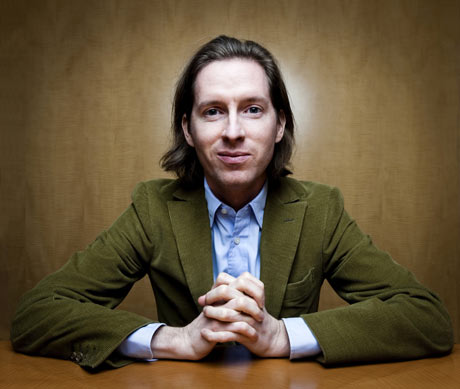
Rejected items:
http://www.nybooks.com/blogs/nyrblog/2013/jan/31/wes-anderson-worlds/
I've rejected this piece because it was just an extract of an introduction for a book on Wes Anderson and was just comparing him to other individuals who share his level of detail. Moreover as it was just introducing his piece, it didn't include much information or evidence on why Anderson could or couldn't be regarded as an auteur.
pitchfork interview http://pitchfork.com/features/interviews/8877-wes-anderson/1/
I've rejected this interview as it briefly focused on the musical aspects of Anderson's film, and was more about his personal opinions when it came to music. Also it didn't produce any useful evidence i could use for my presentation.
This wasn't useful and i rejected it because it was a brief piece and didn't really discuss how these films affected Anderson's visual narrative style. Moreover it didn't allow me to support any points i could make about whether he is an auteur.
I rejected this piece again because it simply documented what Anderson has directed and didn't comment or provide any supporting evidence on Anderson's particular visual narrative style.
http://flavorwire.com/383699/exclusive-illustrated-floor-plans-for-wes-anderson-films/4/
I've rejected this item as it is an unofficial illustration for a blog inspired by Anderson's films. This isn't useful as it is just an illustration and as it is created by a third party, it doesn't particularly show Anderson's visual narrative style and doesn't suggest he is an auteur.
Thursday, 20 June 2013
Auteur & Wes Anderson
Auteur & Wes Anderson
6) analyses thing
This helps explain some of the technical reasons why Wes Anderson can be regarded as an auteur, explaining how some of his films have a colour palette and scheme, like the "yellow, green and pale blue in Moonrise Kingdom. But also explains how the soundtrack adds to the visual style, behaving like another character.
7) auteur of our generation article
This piece would be a good piece of evidence, as it explains why Anderson can be regarded as an auteur, showing how his auteur style has been influenced by other filmakers like Truffaut, and other Nouvelle Vague auteurs.
Reject: pitchfork interview
8) grantland interview
"Favourite" films interview
NPR transcript
everything he's ever directed
9) Guardian interview
This is a good piece of evidence as the interview helps to explain how the themes in Anderson's films affect his visual narrative style, showing how he views certain characters and why he decided to focus on their story. Moreover it supports the idea that Anderson is an auteur, suggesting that his style is influential over everything in his films.
10) Adventures in the Screen Trade by William Goldman
In the auteur chapter, he argues against it's existence, citing that a film is authored by all those involved
Thursday, 13 December 2012
The Hunt

- Film shows main character surrounded and reflects the plot of the film and shows that everyone is against him.
- As well as that he appears in focus and shows the plot revolves around him
- Has the films director showing promenently and will attract fans of the director, and will draw the audience.
- It also has the main characters actor's name on it to attract his fans
- It also shows it was part of the official selection for cannes and will draw the audience in as it shows the film has received some recognition
Tuesday, 4 December 2012
Skyfall
 |
| bond init |
Bond appears in the centre showing his dominance and importance to the film, but also illustrates the franchise and attract people automatically to the film. But also fans of Daniel Craig will be attracted as well as he appears clearly and looking directly towards the viewer. Bond also appears in a suit and holding a gun, which are motifs of the franchise and would attract fans of the past films as it shows the Bond people loved in previous films hasn't changed. Bond's face also appears half in shadow and half in light, and suggests to the audience that his actions aren't always good, but the half in light shows he has good intentions, which is a regular theme throughout the Bonds.
Daniel Craig's name doesn't appear on the poster showing that he isn't the main attraction to the film, but the highlighted 007 and the repetition of it shows that people are attracted to watch the film because of the character and the narrative of the films. The union jack appears in colour showing the importance of it and his country, and shows that the storyline is going to revolve around protecting Britain.
- The obituary of Bond creates questions for the audience as it implies Bond is dead and attracts people to the film as they want answers.
- The trailer also reveals the plot of the film which will attract more people to the film and draw them in as they want to know what will happen.
- Action from the film is included which portrays the genre of the film and will attract the target audience
- The trailer also shows motifs of the Bond franchise and will attract loyal fans of the franchise
Wednesday, 10 October 2012
Alien Analyse
I had to analyze two
scenes from the 1979, sci-fi horror film, Alien, and discuss how the
cinematography helps to add to the scenes.
The first scene I had
to analyze was the Chestburster scene, where the crew helplessly holds down
Kane as the alien forces itself out of his chest. The scene starts with the crew sitting around
the table in the canteen, celebrating Kane’s ‘recovery’. The wide medium shot creates a sort of
normality and the three shot helps to support this and makes the scene feel
more innocent and creates a false sense of security in the audience, who like
me, believe Kane has recovered and is fine, which creates more surprise,
confusion and shock as the scene progresses. I also felt that the eye level
shot helped to make me feel part of the scene and part of the crew, which makes
the viewer more caring for Kane when he rolls in pain. The quite neutral eye
level mid shot also makes me and the audience more unaware and oblivious to the
alien inside of Kane.
However when Kane
starts to cough uncontrollably, he appears in the centre of the screen, and the
shot obeys the rule of thirds. This helps to make Kane the centre of attention
for the audience and creates more tension as the audience and I are unsure on
what is happening but we know it is important as he dominates the shot. As the crew and the audience start to worry
for Kane, it quickly changes to a high angle mid-close up. This helps to show
how vulnerable Kane is, and foreshadows threat from within. In this shot it also shows some of the crew,
which also foreshadows that they aren’t save either. As well as that Kane appears with his back
towards the camera, the mise en scene of this shows how Kane isn’t himself,
which creates more suspense as I and the audience want to know what is wrong
with him.
The diegetic sound of
Kane coughing and the crew asking if he is okay, just add to the realism of the
scene and makes it more believable. I found myself feeling like part of the
crew and feeling like I was in the room with them, confused as to why Kane was
coughing. As he collapses onto the table, it cuts to hand held point of view
shots of Kane struggling on the table. These jerky shots help to make the
audience feel apart of the scene and I felt like I was helping to hold down
Kane. The majority of shots in the scene
are in deep focus, this makes it harder to miss anything and allows the
audience to see everything. This makes
the scene more shocking and disturbing and you feel apart of it and the medium
close ups makes the audience witness all of Kane’s struggle and pain, and made
the scene more memorable and disturbing for me, as you can see all the agony
Kane is in.
But the sudden shift
to shallow focus and the close up of the alien, once it burst through, shows
the significance of it and foreshadows the dominance it will have over the
other members of the crew. Moreover the sudden silence and the lack of diegetic
sound, which the alien provokes, shows the shocking and horrible nature of it
and just emphasizes the tragic nature of Kane’s death.
The second scene I had
to analyze was the, Here Kitty scene. In the scene Brett goes after the cat but
however is attacked and killed by the alien. The scene uses a lot of close ups
on Brett and uses shallow focus to distort the background and create more
tension and suspense as the audience and I watch the unfocused alien creep up
on Brett. The cinematography is also added to by the diegetic sound of his
death. Also it doesn't use music and made it more realistic for me and more
believable. Moreover the scene uses low key lighting which is a convention of
the horror genre, and makes the audience more suspicious of what is about to
happen, but also again it builds more tension and suspense as the audience can
anticipate Brett’s death. As well as that,
the editing helps to create a confusion and made me feel like I was apart of
the scene. Also after Brett is attacked, there is a Shot Reverse Shot, using
the cat. This creates the point of view
of the cat and makes the audience feel like they are witnessing Brett’s death,
bringing a shocking realism to the scene.
Sunday, 30 September 2012
Inglourious Basterds
Inglourious Bastards
is a 2009 action war film directed by Quentin Tarrantino set in Nazi-occupied France . The scene analyzed is in the projector room
when Fredrick interrupts Shosanna.
The scene starts with
a tracking hand held shot following Fredrick walking towards the projection
room. This builds up tension and suggests to the audience that something
important and significant is about to occur. Fredrick also appears in the
centre of the screen which implies that he will be the catalyst for something to
happen.
When Shosanna answers
the door and talks to Fredrick, the two characters are divided by the doorway,
which shows the conflict between them and the difference of opinions the two
have. They use Medium-close ups on the two when they talk to easily show their
emotions and they use over the shoulder shots to represent the suspicion of
each other but also of the time as no one could be trusted. They also use clean, sharp cuts to divide
them and to again show how the two are different.
Lighting is something
that is important in this clip. When Fredrick knocks on the door, Shosanna goes
into the shadow. Fill light is used to shadow her which shows her bad
intentions and foreshadows her actions. However when she talks to him in the
doorway, she goes into the light whereas Fredrick is in the dark. This
illustrates who is more morally right, and who the audience is rooting for. But
once Fredrick is shot, the low key lighting causes Shosanna to go into the
shadow, while wounded Fredrick lies across the light. This builds up suspense
but also casts judgment on Shosanna and portrays Fredrick as innocent. The changing lighting of the scene help to
add to the narrative and the story. But also shows the conflicting feelings
Shosanna as she attempts to do something good but uses morally wrong methods.
In the scene it cuts
to the man behind the screen. He is back lit to show his importance to the film
and the situation. Moreover he is the only thing visible in the shot, which
just emphasizes his importance and suggests he will do something dramatic in
the film. Also he lights a cigarette and starts to smoke it, suggesting he is
nervous and how tense the situation is. This foreshadows that something is
about to happen in the film.
Shots are also
important to the scene. When Fredrick barges into the projector room, a low
angle, long-medium shot to show his power over Shosanna and his superiority. He
is also in the centre of the shot; to show is his dominance over the shot, and
Shosanna. Moreover when both lay shot on the floor, the sequence cuts to a high
angle of them both. They are looked down from above, showing how both are as
bad as each other, and both have committed morally wrong actions. Also, it
shows how both are insignificant in the wider war and are just another two
people who have been damaged by the war.
As well as that the
mise en scene of the scene is important to. Shosanna appears in red, which
implies how dangerous she is but also represents the love and lust towards her
that Fredrick feels. Also Fredrick’s
uniform suggests an internal conflict. The black collar and cuffs show his
darker tendencies and reminds the audience and the immoral things he has done.
But the white jacket shows how he wants to be good, and not hated and that he
is ashamed of some of his actions.
Once Shosanna is shot,
the scene goes into slow motion. This helps to emphasize the significance of
her death and the dramatic and violent way she died. This is supported by the shallow focus which
makes her the focus point of the shot. Furthermore the sympathetic music helps
to highlight the tragedy of the scene and her death.
Without these key
parts the scene wouldn’t be as dramatic or memorable.
Sunday, 9 September 2012
Why I like The Social Network
It takes a lot for me
to really love a film. I have to like every aspect of it. The acting, the
screenplay, the story, the cinematography and even the music. But The Social
network has all of these things.
The film follows the
rise of Facebook and how its rise to prominence effected the people
involved. The 2010 drama was based on
the book The Accidental Billionaires written by Ben Mezrich, and was directed
by David Fincher and the Screenplay was written by Aaron Sorkin.
To someone who hasn’t
watched the film they may believe that the film focuses all around the
development of Facebook, however this takes a back seat, and the real focus and
interesting part of the film is how the personal relationships, especially
between Mark Zuckerburg and Eduardo Saverin, evolve as Facebook gets more
exposure. The story may follow the development of a new social media site, but
the themes of friendship, loyalty, and jealousy are classic. Because of this,
more people are able to identify with and enjoy it. And this is why I enjoy it
so much. The story is engaging and the audience feels empathy for both
Zuckerburg and Saverin as both get rejected, Saverin is rejected from the
company and Zuckerburg who is rejected from his friends and the people around
him. I also enjoy how Zuckerburg is portrayed. Normally an audience would take
a dislike to his character immediately due to his conflict causing personality,
and the actions he takes. However this isn’t the case, the audience just feels
sorry for him, as all he is trying to do is to get people to like him, and
isn’t that what everyone try’s to do? And this is why I love the film, it shows
how the same problems in our lives effect everyone, and when a international
company is involved, the problems are just magnified.
As well as the great
script, the film is beautifully directed which makes the audience feel they are
a part of the film. Especially when the film is still at Harvard, when they
first start coding facebook it feels like you are in the dorm with them,
developing the idea with them. Moreover each individual performance by the
actors is believable and excellent and just adds to the story.
However watching the film you do have to remember
that the film is loosely
based on real events, and should be treated as
more of a work of fiction than a
biographical film. However I don’t think this
takes anything away from the film, as
it allows the film to be more
entertaining. The Social Network is one
of my
favourite films and always impresses me every
time I watch it.
Subscribe to:
Posts (Atom)